Shopify Retention Analytics: Reports, Metrics and Actions
Shopify retention analytics helps merchants understand how customers behave after their first purchase.
Instead of only tracking sales, retention analytics shows whether customers return, how often they buy, and how much revenue they create over time.
For Shopify stores, this data helps improve repeat purchases, increase customer lifetime value, and reduce dependence on paid acquisition.
A store does not grow only by getting more customers. It grows by keeping valuable customers longer.
What Is Shopify Retention Analytics?
Shopify retention analytics is the process of measuring customer behavior after purchase to understand loyalty, repeat buying patterns, and long-term revenue value.
It helps Shopify merchants answer important questions:
- How many customers purchase again?
- Which products create repeat buyers?
- Which customers generate the most revenue?
- When do customers usually return?
- Which customers are at risk of leaving?
Retention analytics turns Shopify customer data into marketing decisions.
Why Shopify Merchants Need Retention Analytics
Many Shopify stores focus mainly on acquisition metrics.
They track:
- Website traffic
- Ad performance
- Conversion rate
- First-time purchases
These numbers are useful, but they do not show the full picture.
A store can generate strong sales today but still struggle if customers never return.
Retention analytics helps merchants understand the quality of their customer relationships.
| Metric Type | What It Shows |
|---|---|
| Acquisition metrics | How customers find your store |
| Conversion metrics | How customers complete purchases |
| Retention metrics | How customers return and create long-term value |
Strong retention allows Shopify merchants to grow revenue without increasing ad spend at the same rate.
Shopify Retention Analytics Framework
A simple retention analytics process follows five steps:
| Step | Action | Purpose |
|---|---|---|
| 1 | Measure customer behavior | Understand current performance |
| 2 | Analyze customer patterns | Find growth opportunities |
| 3 | Segment customers | Create targeted campaigns |
| 4 | Take action | Improve retention |
| 5 | Measure results | Optimize campaigns |
Analytics only creates value when merchants use the data to make decisions.
Shopify Retention Metrics You Should Track
1. Repeat Purchase Rate
Repeat purchase rate shows the percentage of customers who buy more than once.
Formula:
Repeat Purchase Rate = Returning Customers ÷ Total Customers × 100
Example:
A Shopify store has:
- 2,000 total customers
- 500 returning customers
Calculation:
500 ÷ 2,000 × 100 = 25%
A higher repeat purchase rate usually indicates stronger customer loyalty.
2. Customer Retention Rate
Customer retention rate shows how many customers continue buying during a specific period.
Formula:
Retention Rate = (Customers at End of Period - New Customers) ÷ Customers at Start of Period × 100
This metric helps merchants understand whether customers stay active over time.
3. Customer Lifetime Value (CLV)
Customer lifetime value shows the total revenue a customer creates during their relationship with a brand.
Example:
Customer A:
- One purchase
- $100 total revenue
Customer B:
- Five purchases
- $500 total revenue
Customer B has a higher lifetime value.
CLV helps Shopify merchants decide how much they can spend to acquire customers.
4. Purchase Frequency
Purchase frequency shows how often customers buy from a store.
This metric is especially important for:
- Beauty products
- Supplements
- Coffee
- Pet products
- Subscription products
A Shopify coffee brand may discover that repeat customers reorder every 45 days.
That insight can improve email and SMS campaigns.
5. Customer Churn Rate
Churn rate shows the percentage of customers who stop buying.
High churn can indicate:
- Poor customer experience
- Product issues
- Weak communication
- Lack of engagement
Tracking churn helps merchants find retention problems early.
Shopify Cohort Analysis Explained
Cohort analysis groups customers based on shared behavior.
Instead of looking at all customers together, merchants can compare groups over time.
Example:
A Shopify store compares customers who first purchased in different months.
| Customer Group | Month 1 | Month 3 | Month 6 |
|---|---|---|---|
| January customers | 100% | 40% | 25% |
| February customers | 100% | 45% | 30% |
| March customers | 100% | 50% | 35% |
This helps merchants understand whether newer customers are becoming more valuable.
Shopify Customer Segmentation Analytics
Customer segmentation helps merchants send more relevant campaigns.
Useful Shopify customer segments include:
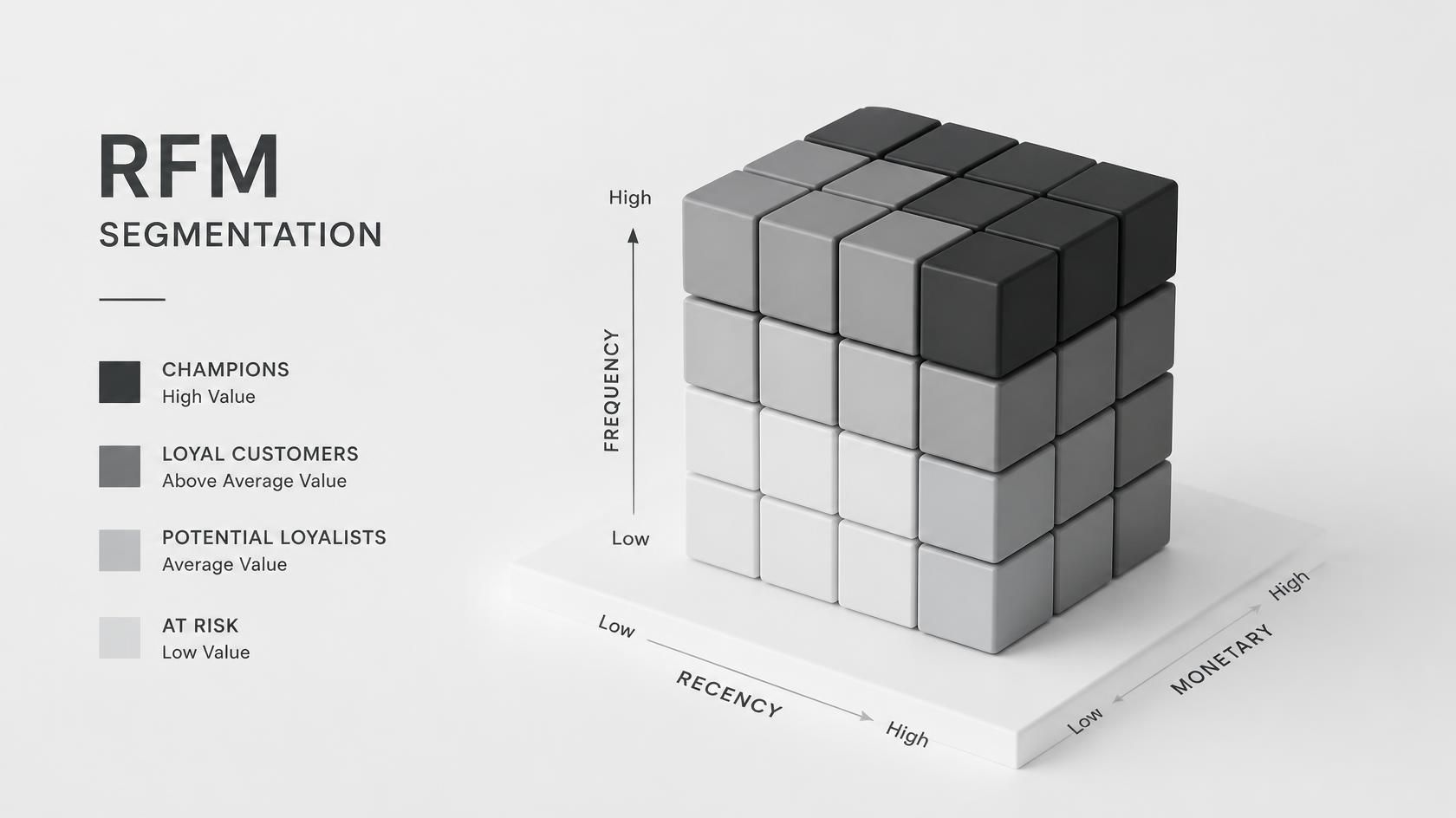
| Customer Segment | Retention Strategy |
|---|---|
| First-time buyers | Send onboarding emails |
| Repeat customers | Offer loyalty rewards |
| VIP customers | Create exclusive benefits |
| Inactive customers | Launch win-back campaigns |
| High-value customers | Provide personalized offers |
A new customer and a loyal customer should not receive the same message.
How to Build a Shopify Retention Dashboard
A Shopify retention dashboard should focus on customer behavior, not only revenue.
Important dashboard sections include:
| Dashboard Area | Metrics | Business Decision |
|---|---|---|
| Customer loyalty | Repeat purchase rate | Improve retention campaigns |
| Customer value | CLV | Adjust acquisition budget |
| Product performance | Repeat purchase products | Promote high-value products |
| Customer risk | Churn rate | Create recovery campaigns |
| Customer behavior | Purchase frequency | Improve timing |
A good dashboard helps merchants move from guessing to data-driven decisions.
How Shopify Merchants Can Use Retention Analytics to Increase Sales
Retention analytics becomes valuable when it leads to action.
Create Better Email Campaigns
Use customer behavior to create targeted messages.
Examples:
- Reorder reminders
- Product education emails
- Personalized recommendations
- Loyalty updates
A skincare store can send a refill reminder based on expected product usage.
Improve Loyalty Programs
Retention data helps identify valuable customers.
A Shopify brand can reward customers who:
- Purchase frequently
- Spend more
- Refer friends
This creates stronger customer relationships.
Launch Win-Back Campaigns
Analytics helps find customers who stopped buying.
Example:
A Shopify store notices customers usually reorder every 60 days.
Customers who reach 90 days without buying can receive a win-back campaign.
Improve Product Strategy
Retention data shows which products create loyal customers.
Example:
A fashion brand discovers customers who buy jackets often purchase accessories later.
The brand can create targeted recommendations.
Shopify Retention Analytics Tools
Shopify merchants can use different tools depending on their needs.
| Tool Type | Best Use |
|---|---|
| Shopify Analytics | Basic store reporting |
| Shopify customer reports | Customer behavior tracking |
| Email marketing platforms | Retention campaigns |
| Loyalty apps | Reward tracking |
| Analytics platforms | Advanced customer insights |
Small stores often need simple reporting.
Growing brands usually need deeper customer analysis and automation.
Real Shopify Retention Analytics Examples
Skincare Shopify Store
Analytics shows customers reorder products every 60 days.
Action:
The brand creates a 45-day replenishment email campaign.
Result:
Customers receive reminders before they run out.
Coffee Shopify Store
Analytics shows subscription customers have higher lifetime value.
Action:
The brand promotes subscriptions to repeat buyers.
Result:
More predictable monthly revenue.
Fashion Shopify Store
Analytics shows VIP customers buy new collections quickly.
Action:
The brand creates early-access campaigns.
Result:
Higher engagement from valuable customers.
Common Shopify Retention Analytics Mistakes
Tracking Only Sales Revenue
Revenue shows performance today, but retention shows future growth.
Ignoring Returning Customers
Existing customers often create more value than new buyers.
Not Segmenting Customers
Different customers need different experiences.
Collecting Data Without Action
Analytics only helps when merchants use insights to improve campaigns.
Frequently Asked Questions
What is Shopify retention analytics?
Shopify retention analytics measures customer behavior after purchase, including repeat purchases, customer lifetime value, and buying patterns.
What Shopify retention metrics should merchants track?
Shopify merchants should track repeat purchase rate, retention rate, CLV, purchase frequency, and churn rate.
How do I improve customer retention on Shopify?
Merchants can improve retention through personalized campaigns, loyalty programs, better customer experience, and data-driven marketing.
Does Shopify provide retention analytics?
Shopify provides customer and sales reports, but many merchants use additional analytics and marketing tools for deeper retention insights.
Why is retention analytics important for Shopify stores?
Retention analytics helps Shopify merchants understand customer behavior, increase repeat purchases, and create more predictable revenue.
Final Thoughts
Shopify retention analytics helps merchants understand what happens after the first sale.
Sales reports show what customers bought. Retention analytics shows why customers come back.
By tracking repeat purchases, customer lifetime value, churn, and customer behavior, Shopify stores can create better marketing campaigns and stronger customer relationships.
The goal is not only to get more customers.
The goal is to build customers who continue creating value over time.