Customer Retention: Meaning, Metrics and Examples
Customer retention means keeping existing customers and getting them to buy again, renew, or keep using your product.
A business needs customer retention because new customers cost money to win. Existing customers already know the brand, so they often need less effort to buy again.
Customer retention also shows how healthy a business really is. A company can get many new buyers, but weak retention means those buyers leave too soon.
The best retention strategy does not start with discounts. It starts with one clear question: where do customers leave, and why do they leave?
This guide explains customer retention, key metrics, churn reasons, retention strategies, examples, tools, and common mistakes.
What Is Customer Retention?
Customer retention is the ability of a business to keep its customers over a set period.
A retained customer may buy again, renew a plan, keep using a product, or stay with the same service provider. The exact action depends on the business model.
For an ecommerce brand, customer retention means repeat purchases. For a SaaS company, customer retention means renewals and continued product use.
For a local service business, customer retention means the customer comes back instead of choosing another provider.
Customer Retention Definition
Customer retention means keeping existing customers active, satisfied, and loyal over time.
A customer counts as retained when they continue their relationship with the business. That relationship may involve buying, subscribing, booking, renewing, or using the product.
A simple example makes this clear. A customer buys shampoo from an online store in January and buys it again in March. That customer shows retention.
Customer Retention in Simple Terms
Customer retention starts after the first sale.
The first sale proves that a customer trusted the brand once. Retention proves that the brand gave them enough value to come back.
In my opinion, retention is the real test of product quality. Marketing can bring people in, but only a good experience brings them back.
Customer Retention Example
A coffee shop retains customers when regular buyers visit every week.
A SaaS company retains customers when users renew their monthly plan. A skincare brand retains customers when shoppers reorder the same product after it runs out.
A dental clinic retains patients when they book their next cleaning without looking for another clinic.
Customer Retention vs. Customer Loyalty
Customer retention means the customer stays.
Customer loyalty means the customer prefers the brand and may recommend it to others. These two ideas connect, but they do not mean the same thing.
| Term | Meaning | Example |
|---|---|---|
| Customer retention | The customer keeps buying or using the product | A user renews a software plan every month |
| Customer loyalty | The customer prefers the brand and supports it | A shopper recommends the brand to friends |
| Customer satisfaction | The customer feels happy with the experience | A buyer leaves a positive review |
| Customer engagement | The customer interacts with the brand | A customer opens emails, uses an app, or joins a community |
A customer may stay because switching feels hard. A loyal customer stays because they trust the brand.
Why Is Customer Retention Important?
Customer retention matters because it protects revenue that a business already worked hard to earn.
A company that keeps customers can grow with less pressure. It does not need to replace lost customers every month just to stay in the same place.
Strong retention also helps a business understand product-market fit. When customers keep coming back, the product likely solves a real problem.
Customer Retention Lowers Acquisition Costs
Customer retention lowers growth costs because existing customers already know the brand.
A new customer may need ads, sales calls, discounts, content, and follow-ups before they buy. An existing customer often needs a good reminder, a smooth experience, or a useful offer.
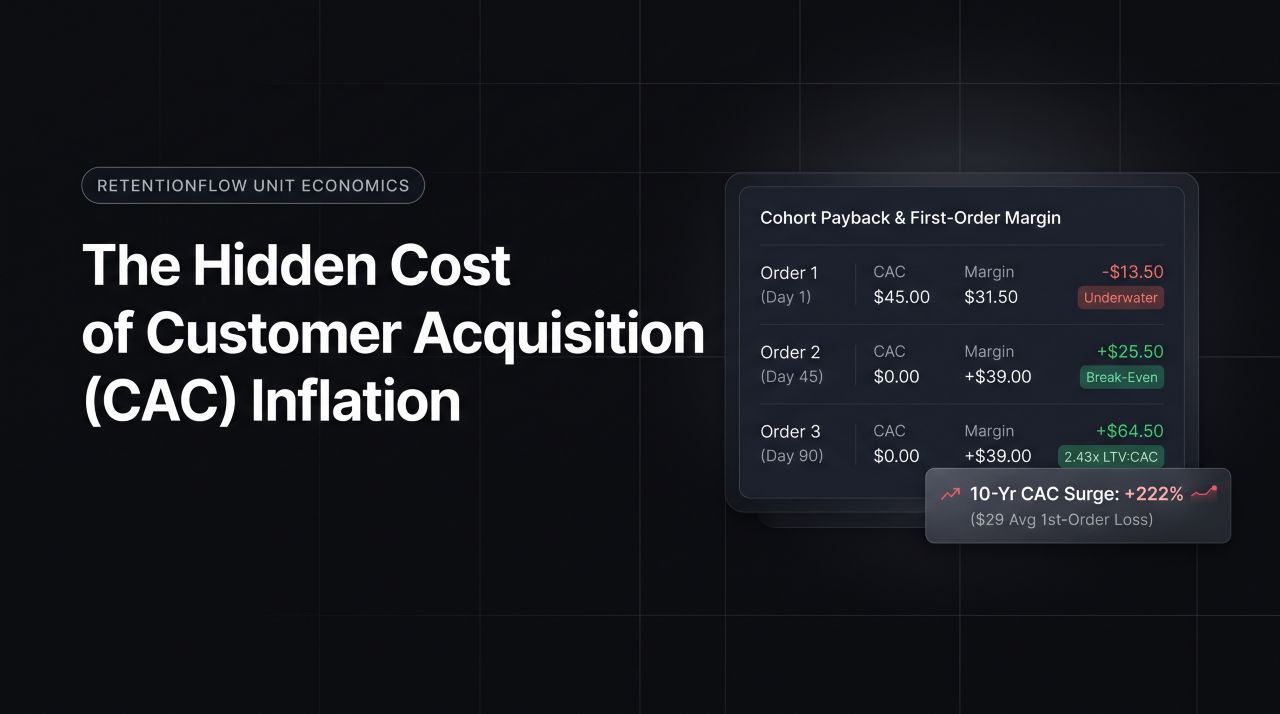
This matters in the real world because ad costs can rise fast. A brand that depends only on paid acquisition can struggle when traffic becomes expensive.
Customer Retention Increases Revenue
Customer retention increases revenue because returning customers often spend more over time.
They already trust the product. They also understand the brand’s quality, service, price, and delivery process.
For example, a first-time skincare buyer may order one product. A retained customer may come back for a full routine, bundle, or subscription.
Customer Retention Improves Customer Lifetime Value
Customer lifetime value increases when customers stay longer.
A customer who buys once gives the business one sale. A customer who buys every month gives the business repeated revenue.
This makes retention important for ecommerce, SaaS, agencies, local services, subscription brands, and B2B companies.
Customer Retention Creates Stable Growth
Retention creates stable growth because repeat customers make revenue more predictable.
A SaaS company with strong renewal rates can plan better. A subscription brand with low churn can forecast future revenue with more confidence.
A business with weak retention has a leaky bucket. New customers enter, but many leave before the company earns enough value from them.
Customer Retention Builds Brand Advocates
Retained customers can become brand advocates.
They may leave reviews, share referrals, join a loyalty program, or recommend the product to friends. This kind of word-of-mouth can support customer acquisition without large ad spend.
In my view, the best customers do more than buy again. They make the brand easier to trust.
Main Benefits of Customer Retention
| Benefit | Why It Matters |
|---|---|
| Lower marketing cost | Existing customers need less convincing |
| Higher revenue | Repeat buyers often spend more over time |
| Better customer lifetime value | Longer relationships create more total revenue |
| More stable growth | Retention makes revenue more predictable |
| Stronger brand trust | Happy customers can refer others |
| Better feedback | Loyal customers often share useful product insights |
Customer Retention vs. Customer Acquisition
Customer retention and customer acquisition both matter.
Customer acquisition brings new customers into the business. Customer retention keeps those customers after the first sale.
A business needs both to grow. Still, the balance changes as the business matures.
What Is Customer Acquisition?
Customer acquisition means getting new customers.
A business may use paid ads, SEO, cold outreach, influencer marketing, referrals, events, social media, or sales calls to win new buyers.
Acquisition works best when the business needs market awareness, first-time buyers, and new revenue sources.
What Is Customer Retention?
Customer retention means keeping customers after they buy.
Retention focuses on customer experience, customer support, onboarding, repeat purchases, renewals, loyalty, and product value.
A strong retention system keeps customers engaged after the first transaction.
Which One Should a Business Prioritize?
A new business should focus on acquisition first because it needs customers.
A growing business should invest more in retention once it has steady sales and enough customer data. At that stage, it should study who buys again, who leaves, and which customer groups create the most value.
A mature business should balance both. It should keep winning new customers while improving retention for current customers.
Expert Opinion
Acquisition fills the bucket. Retention plugs the leak.
A company with strong acquisition and poor retention keeps paying to replace customers. That model can work for a short time, but it becomes expensive and risky.
In my opinion, retention deserves attention as soon as a business has repeat customer data. Waiting too long can hide product, service, and experience problems.
Customer Retention vs. Customer Acquisition Table
| Area | Customer Acquisition | Customer Retention |
|---|---|---|
| Main goal | Get new customers | Keep existing customers |
| Main stage | Before first purchase | After first purchase |
| Common channels | Ads, SEO, outreach, referrals | Email, support, loyalty, onboarding |
| Main metric | Conversion rate, CAC | Retention rate, churn rate, CLV |
| Cost level | Usually higher | Usually lower |
| Business value | Creates new demand | Protects long-term revenue |
Why Do Customers Leave?
Customers leave when the product, service, or experience no longer feels worth it.
Churn rarely happens for no reason. Most customers leave because something in the customer journey creates friction, doubt, or disappointment.
A good retention strategy starts by finding the real reason behind churn.
Poor Customer Service
Customers leave when support feels slow, cold, or unhelpful.
A customer may forgive a product issue if the company responds fast and solves it well. But they may leave if they feel ignored.
Support matters more when the customer depends on the product for work, health, money, or daily life.
Lack of Product Value
Customers leave when the product no longer solves their problem.
This can happen when the product feels too basic, too expensive, too hard to use, or weaker than a competitor. It can also happen when customer needs change.
A customer does not stay just because they bought once. They stay when the product keeps proving its value.
Friction in the Buying Process
Customers leave when buying feels difficult.
A slow website, confusing checkout, hidden fees, unclear return policy, or weak payment experience can hurt repeat purchases.
Friction also hurts subscriptions. If customers struggle to update payment details, change plans, or get help, they may cancel.
Bad First-Purchase Experience
A bad first-purchase experience can stop the second order.
For ecommerce brands, this may include late delivery, poor packaging, wrong sizing, missing items, unclear instructions, or weak product quality.
The first order sets the tone. If the first experience disappoints, the customer may never give the brand another chance.
Slow Shipping or Delivery Issues
Slow shipping can hurt retention even when the product is good.
Customers often compare delivery with the best experience they have had, not just with direct competitors. This creates pressure for ecommerce, DTC, food, beauty, fashion, and subscription brands.
Clear tracking, realistic delivery dates, and fast support can reduce this risk.
Weak Personalization
Customers leave when every message feels generic.
A returning customer expects the brand to understand purchase history, interests, size, product needs, or account status. Poor personalization can make the relationship feel shallow.
Good personalization should feel useful. It should not feel invasive or random.
Better Competitor Offers
Customers leave when competitors offer better value.
Better value does not always mean lower price. It may mean better support, faster shipping, easier setup, stronger features, higher quality, or a smoother customer experience.
A brand should study competitors, but it should not copy them blindly. It should improve the parts that matter most to its own customers.
Common Reasons Customers Leave
- Poor support experience
- Slow replies
- Product quality issues
- Weak onboarding
- Confusing website or app
- Late shipping
- Hidden fees
- Better competitor value
- Too many promotional emails
- No personal connection
- Poor return or cancellation process
When Do Customers Churn?
Customers churn at different points in the customer journey.
Some customers leave after the first purchase. Others leave after several orders, during onboarding, before renewal, or after a bad support experience.
Knowing when customers churn helps a business choose the right fix.
Early Churn After the First Purchase
Early churn happens when customers buy once and never return.
This matters most for ecommerce and DTC brands. A customer who never makes a second purchase often signals a problem with product fit, delivery, post-purchase emails, pricing, or customer expectations.
The second purchase is a key retention milestone. A business should treat it as one of the most important moments in the customer lifecycle.
Churn After Several Purchases
Some customers leave after two, three, or more purchases.
This means the brand created enough value at first, but failed to keep the relationship strong. The issue may involve product variety, weak loyalty benefits, poor timing, or better offers elsewhere.
This type of churn needs deeper analysis. A simple win-back discount may not solve it.
Churn Before Renewal
Subscription and SaaS customers often churn before renewal.
This can happen when users do not see enough value, fail to adopt the product, face billing issues, or feel locked into the plan.
A business should not wait until cancellation. It should track warning signs like low usage, missed payments, support complaints, and poor engagement.
The Loyalty Point
The loyalty point is the stage where customers become more likely to keep buying.
For an ecommerce brand, this may happen after the second or third order. For a SaaS product, it may happen after the user completes setup and starts using the product often.
The loyalty point helps teams focus. If most customers become stable after order three, then the brand should work harder to move people from order one to order three.
Churn Timing Table
| Churn Stage | What It Means | Best Fix |
|---|---|---|
| After first purchase | Customer did not return | Improve first experience and second-purchase flow |
| After several purchases | Customer lost interest | Add product variety, loyalty, or better engagement |
| During onboarding | Customer did not see value fast | Improve setup, education, and support |
| Before renewal | Customer questions the value | Use proactive success and usage-based reminders |
| After support issue | Customer lost trust | Improve support speed and resolution quality |
Key Customer Retention Metrics
Customer retention metrics show how well a business keeps customers.
A business should not rely on one metric. It should use a small set of metrics that match the business model.
The right metrics help teams find churn problems, measure repeat purchases, and improve customer lifetime value.
Customer Retention Rate
Customer retention rate shows the percentage of customers a business keeps during a set period.
Use this formula:
Customer Retention Rate = ((Customers at End of Period - New Customers) / Customers at Start of Period) x 100
Example:
A business starts the month with 1,000 customers. It ends the month with 1,100 customers and gained 200 new customers.
The calculation would be:
((1,100 - 200) / 1,000) x 100 = 90%
That means the business retained 90% of its starting customers.
Customer Churn Rate
Customer churn rate shows the percentage of customers lost during a set period.
Use this formula:
Customer Churn Rate = (Customers Lost During Period / Customers at Start of Period) x 100
Example:
A company starts the month with 1,000 customers and loses 80 customers.
The calculation would be:
80 / 1,000 x 100 = 8%
That means the churn rate is 8%.
Customer Lifetime Value
Customer lifetime value shows how much revenue a business expects from one customer over time.
Use this simple formula:
CLV = Average Order Value x Purchase Frequency x Customer Lifespan
Example:
A customer spends $50 per order. They buy 4 times per year and stay for 3 years.
The calculation would be:
$50 x 4 x 3 = $600
That customer has an estimated lifetime value of $600.
Repeat Purchase Rate
Repeat purchase rate shows how many customers buy more than once.
Use this formula:
Repeat Purchase Rate = Repeat Customers / Total Customers x 100
This metric works well for ecommerce, retail, beauty, fashion, food, and DTC brands.
A low repeat purchase rate often points to a weak first experience or poor post-purchase marketing.
Purchase Frequency
Purchase frequency shows how often customers buy within a period.
Use this formula:
Purchase Frequency = Total Orders / Unique Customers
Example:
A store gets 2,000 orders from 1,000 customers.
The purchase frequency is:
2,000 / 1,000 = 2
That means each customer placed 2 orders on average.
Average Order Value
Average order value shows how much customers spend per order.
Use this formula:
AOV = Total Revenue / Total Orders
Example:
A store earns $100,000 from 2,000 orders.
The AOV is:
$100,000 / 2,000 = $50
AOV helps a business understand order value, but it should not replace retention metrics.
Net Revenue Retention
Net revenue retention works best for SaaS and subscription businesses.
It shows how much revenue a business keeps from existing customers after renewals, upgrades, downgrades, cancellations, and expansions.
A company with strong net revenue retention may grow even without many new customers. That usually means existing customers expand their accounts over time.
Customer Satisfaction Score
Customer satisfaction score shows how happy customers feel after a specific experience.
A business can ask a simple question after a purchase or support chat: “How satisfied were you with your experience?”
This metric helps connect customer service with retention.
Net Promoter Score
Net Promoter Score shows how likely customers are to recommend the brand.
It can signal customer loyalty, but it does not replace retention data. A customer may say they like a brand and still never buy again.
Use NPS with churn rate, repeat purchase rate, and customer lifetime value for a fuller view.
Customer Retention Metrics Table
| Metric | What It Measures | Best For |
|---|---|---|
| Customer retention rate | Percentage of customers kept | Most businesses |
| Customer churn rate | Percentage of customers lost | SaaS, subscriptions, services |
| Customer lifetime value | Total value of a customer over time | Ecommerce, SaaS, B2B |
| Repeat purchase rate | Share of customers who buy again | Ecommerce and retail |
| Purchase frequency | How often customers buy | Ecommerce and DTC |
| Average order value | Average spend per order | Ecommerce and retail |
| Net revenue retention | Revenue kept from existing customers | SaaS and subscriptions |
| CSAT | Customer satisfaction | Support and service teams |
| NPS | Likelihood to recommend | Loyalty tracking |
Customer Retention Metrics by Business Type
Different business models need different retention metrics.
A furniture store should not measure retention the same way as a coffee subscription brand. A SaaS company should not judge retention the same way as a clothing store.
The best retention metric depends on how often customers should return.
Metrics for Non-Subscription Businesses
Non-subscription businesses should focus on repeat purchase rate, customer lifetime value, purchase frequency, and cohort retention.
This works well for ecommerce stores, DTC brands, fashion brands, beauty brands, home goods brands, and retail businesses.
For example, a furniture brand may not expect customers to buy every month. It should look at long-term repeat behavior, order value, referrals, and category expansion.
Metrics for Subscription Businesses
Subscription businesses should focus on month-on-month retention, churn rate, renewal rate, customer lifetime value, and cancellation reasons.
This works for meal kits, software plans, subscription boxes, memberships, and recurring service plans.
A subscription brand should track whether customers keep paying each billing cycle. It should also track why they pause, downgrade, or cancel.
Metrics for SaaS Businesses
SaaS businesses should track churn rate, renewal rate, product usage, net revenue retention, expansion revenue, support tickets, and customer health score.
Product usage matters because customers often leave when they do not use the product enough.
A SaaS team should watch low login activity, unused features, poor onboarding completion, and failed team adoption.
Metrics for Ecommerce Brands
Ecommerce brands should track repeat purchase rate, repurchase rate, cohort retention, AOV, purchase frequency, LTV, discount usage, and days between orders.
The gap between first order and second order deserves special attention. A brand with many one-time buyers may have weak retention even if revenue looks strong.
Ecommerce teams should also compare customer behavior by product, channel, location, and discount code.
Why One Retention Metric Is Not Enough
One retention metric can hide the real problem.
A brand may have strong revenue because it keeps acquiring new customers, but repeat purchases may be weak. Another brand may have loyal customers, but the average order value may be too low.
In my opinion, the smartest teams use a retention dashboard. They do not trust one number alone.
Business Type and Metric Table
| Business Type | Main Retention Metrics | Why These Metrics Matter |
|---|---|---|
| Ecommerce | Repeat purchase rate, LTV, purchase frequency | Shows whether buyers return |
| DTC brand | Cohort retention, repurchase rate, AOV | Shows product and channel quality |
| SaaS | Churn rate, NRR, product usage | Shows renewal and value delivery |
| Subscription | Month-on-month retention, cancellation rate | Shows ongoing customer commitment |
| Local service | Rebooking rate, review rate, referral rate | Shows trust and convenience |
| B2B service | Renewal rate, account expansion, client satisfaction | Shows long-term relationship health |
How to Diagnose Customer Retention Problems
A business should diagnose retention problems before choosing tactics.
This step matters because many teams jump too fast into loyalty programs, discounts, or win-back emails. Those tactics may help, but only when they match the real problem.
A good diagnosis shows who leaves, when they leave, and why they leave.
Step 1: Check Repurchase Rate
Repurchase rate shows whether customers buy again.
For ecommerce brands, this is one of the best starting points. If most customers never make a second order, the business has a first-purchase or second-purchase problem.
A low repurchase rate may point to product disappointment, poor delivery, weak post-purchase emails, or wrong customer targeting.
Step 2: Review Customer Retention by Cohort
Cohort retention tracks how a group of customers behaves over time.
A common ecommerce cohort is customers who placed their first order in the same month. A SaaS cohort may include users who started a trial in the same week.
Cohort analysis helps a business compare customer behavior across time periods, products, channels, and campaigns.
Step 3: Find the Drop-Off Point
The drop-off point shows where customers stop buying or using the product.
Some customers drop off before the second order. Others drop off after the third order, during onboarding, after a support issue, or before renewal.
The drop-off point tells the team where to focus first. Without this step, the business may fix the wrong part of the journey.
Step 4: Segment Customers
Customer segmentation shows which groups retain better or worse.
Useful segments include:
- Product purchased
- First purchase month
- Marketing channel
- Location
- Discount code used
- Subscriber status
- Sales channel
- Customer tag
- Order count
- Spend level
Segmentation matters because customers do not behave the same way. A first-time discount buyer may behave very differently from a full-price repeat buyer.
Step 5: Compare Purchase Velocity
Purchase velocity shows how quickly customers place the next order.
A short time between orders may show strong demand. A long gap may show weak need, poor timing, or a missed communication opportunity.
For example, a supplement brand may expect reorder behavior within 30 to 60 days. If customers do not return by then, the brand should review reminders, product quality, and subscription offers.
Step 6: Interview Recent Customers
Customer interviews explain what numbers cannot show.
A brand should ask recent buyers what they liked, what disappointed them, why they bought, and what might stop them from buying again.
This step often reveals practical problems. Examples include unclear sizing, slow delivery, poor instructions, weak packaging, high shipping cost, or confusing product options.
Step 7: Match the Fix to the Real Cause
The retention fix should match the churn reason.
A loyalty program will not fix poor sizing. A discount will not fix slow shipping. A win-back email will not fix weak onboarding.
This is where many brands waste money. They treat symptoms instead of fixing the cause.
Retention Diagnosis Table
| Question | What to Check | Possible Fix |
|---|---|---|
| Who leaves? | Customer segments and cohorts | Build segment-specific retention plans |
| When do they leave? | Drop-off point in the journey | Fix that exact customer stage |
| Why do they leave? | Surveys, support tickets, interviews | Remove the root cause |
| What do loyal customers buy? | Product-level LTV | Promote high-LTV products |
| Which channels retain best? | LTV by acquisition source | Invest in better-quality channels |
| Do discounts create loyal customers? | LTV by discount use | Reduce weak discount campaigns |
Best Customer Retention Strategies
The best customer retention strategy depends on the churn reason.
A business should not copy every tactic from a list. It should choose the tactic that fixes its actual customer problem.
The strategies below work best when a business already knows where customers drop off.
1. Improve Customer Onboarding
Customer onboarding helps customers get value fast.
For SaaS, onboarding may include setup checklists, product tours, welcome emails, live demos, help docs, and customer success calls.
For ecommerce, onboarding may include product care tips, usage guides, delivery updates, and “how to get the best results” emails.
Good onboarding reduces confusion. It also helps customers feel confident after the purchase.
2. Accelerate the Second Purchase
The second purchase is one of the most important customer retention milestones.
A customer who buys twice has already shown more trust than a one-time buyer. That makes the second order a major focus for ecommerce and DTC brands.
A brand can support the second purchase with:
- Post-purchase email flows
- Reorder reminders
- Product education
- Personalized product recommendations
- Bundles
- Limited-time second-order offers
- Loyalty points after first purchase
This strategy works best when the product naturally supports repeat buying.
3. Offer Fast and Helpful Customer Support
Fast support protects customer trust.
Customers do not always expect instant solutions. But they do expect a clear reply, honest updates, and a team that takes ownership.
Good support can turn a bad moment into a stronger relationship. Poor support can turn a small issue into churn.
4. Personalize the Customer Experience
Personalization helps customers feel understood.
A business can use purchase history, browsing behavior, location, support history, product interest, and lifecycle stage to send better messages.
Good personalization should help the customer. It should not feel creepy, random, or forced.
Examples of useful personalization include:
- Product recommendations based on past orders
- Reorder reminders based on product usage time
- Renewal reminders based on plan date
- Emails based on customer interests
- Support replies that include account history
5. Build a Loyalty Program
A loyalty program gives customers a reason to return.
Good loyalty programs use points, store credit, VIP levels, early access, birthday rewards, exclusive products, or member-only offers.
Still, a loyalty program should not hide a weak product. In my opinion, loyalty rewards work best when customers already like the brand.
6. Use Discounts Carefully
Discounts can support retention, but they can also create bad habits.
A customer who only buys with discounts may not become profitable over time. A business should compare discounted customers with full-price customers to see which group has better LTV.
Discounts work best when they have a clear purpose. Examples include second-order offers, win-back campaigns, bundle deals, or rewards for loyal customers.
7. Promote Products That Drive Higher LTV
Some products create better repeat customers than others.
A brand should study which first products lead to repeat purchases, larger orders, or subscriptions. Then it should promote those products more often.
This strategy helps brands avoid chasing only bestsellers. A bestseller may create revenue, but a high-LTV product creates stronger long-term value.
8. Convert the Right Customers to Subscription
Subscription works best for repeat-use products.
Good examples include coffee, skincare, supplements, pet food, razors, snacks, household goods, and wellness products.
A business should not push subscriptions to everyone. It should target customers who already show repeat buying behavior or use products that need regular replenishment.
9. Collect Customer Feedback
Customer feedback shows why customers stay or leave.
A business can collect feedback through surveys, reviews, support tickets, cancellation forms, live chat, social comments, and customer interviews.
The key is action. Customers lose trust when a brand asks for feedback but never improves anything.
10. Reduce Friction in the Customer Journey
Friction hurts repeat business.
A customer should find it easy to buy, reorder, renew, return, cancel, update payment details, and contact support.
A smooth customer journey can improve retention without adding more discounts or campaigns.
11. Build a Customer Community
A customer community helps people stay connected to the brand.
This can be a Facebook group, Slack community, private forum, member area, event series, or user group.
Community works best when it gives real value. Customers should learn, ask questions, share wins, and feel part of something useful.
12. Use Referral Programs
Referral programs help with both retention and acquisition.
Existing customers get a reward. New customers arrive with trust from someone they know.
A simple referral program usually works better than a complicated one. Customers should understand the reward in seconds.
13. Improve Product Quality
Product quality sits at the center of customer retention.
No email flow, loyalty reward, or CRM tool can save a product that does not solve the customer’s problem.
In my opinion, product value is the strongest retention strategy. Everything else supports it.
14. Use Proactive Customer Success
Proactive customer success means helping before customers complain.
A SaaS team can contact users who stop logging in. A subscription brand can reach out before renewal. An ecommerce store can send reorder reminders before the product runs out.
This strategy works because it catches churn risk early.
15. Send Useful Retention Emails
Retention emails should help, not just sell.
Useful retention emails include welcome emails, product education emails, reorder reminders, renewal alerts, win-back emails, loyalty updates, review requests, and customer success tips.
Lifecycle marketing helps businesses send the right message at the right stage of the customer journey. It supports onboarding, repeat purchases, renewals, win-back campaigns, customer loyalty, and long-term customer retention.
A good retention email gives the customer a clear reason to stay engaged. It should match the customer’s behavior, order history, churn risk, and current stage in the customer journey.
16. Increase AOV After Retention Improves
Average order value matters more when customers already trust the brand.
A business can increase AOV with bundles, upsells, cross-sells, related products, free shipping thresholds, and premium options.
Still, AOV should not come before retention. First, make customers come back. Then help them buy more useful items.
17. Train Employees to Support Retention
Employees shape the customer experience every day.
Support agents, sales reps, account managers, store staff, delivery teams, and onboarding specialists all affect retention.
A company cannot build loyal customers with careless training. Employees need product knowledge, clear processes, and the authority to solve customer problems.
Customer Retention Strategy Table
| Strategy | Best For | Main Goal |
|---|---|---|
| Better onboarding | SaaS, subscriptions, services | Help customers see value fast |
| Second-purchase campaigns | Ecommerce and DTC | Turn first-time buyers into repeat buyers |
| Fast support | All businesses | Protect trust |
| Personalization | Ecommerce, SaaS, retail | Improve relevance |
| Loyalty program | Retail, ecommerce, food, beauty | Encourage repeat buying |
| Careful discounts | Ecommerce and subscriptions | Increase repeat orders without hurting margin |
| Product quality improvements | All businesses | Fix the core reason customers leave |
| Customer success | SaaS and B2B | Reduce churn risk |
| Retention emails | Ecommerce, SaaS, subscriptions | Keep customers engaged |
| Community | Brands with strong identity | Build connection |
Customer Retention Examples
Customer retention looks different across industries.
A SaaS company focuses on renewals and product usage. An ecommerce brand focuses on repeat purchases. A local service business focuses on rebooking and trust.
The examples below show how retention works in real business settings.
Ecommerce Example
An ecommerce skincare brand can retain customers with reorder reminders, product education, loyalty points, and personalized bundles.
This works because skincare products run out. Customers often need help choosing the next product or building a routine.
A strong post-purchase email flow can explain how to use the product, when to expect results, and when to reorder.
DTC Apparel Example
A clothing brand can improve retention by fixing sizing guides, improving returns, sending fit tips, and collecting post-purchase feedback.
Apparel churn often comes from fit, quality, shipping, or return friction. A discount will not fix those problems.
A better retention plan would improve size charts, show real customer photos, offer easy exchanges, and follow up after delivery.
SaaS Example
A SaaS company can retain customers with onboarding, product usage alerts, customer success calls, help docs, and feature education.
SaaS users often leave when they do not reach value fast enough. A strong onboarding process helps users complete setup and build a habit.
The company should also track inactive accounts. Low usage often signals churn risk.
Subscription Business Example
A meal kit brand can retain customers with flexible plans, pause options, recipe variety, and fast support.
Subscription customers dislike feeling trapped. A pause option may keep a customer who would otherwise cancel.
This is a useful lesson for subscription brands. Flexibility can protect retention.
Local Business Example
A dental clinic can retain patients with appointment reminders, friendly follow-ups, easy booking, and clear pricing.
Local service retention depends on trust, convenience, and comfort. A patient may not return if booking feels hard or pricing feels unclear.
Good local retention often comes from small details. Reminder texts, kind staff, and simple scheduling can make a big difference.
B2B Service Example
An agency can retain clients with clear reports, strategy calls, honest updates, KPI tracking, and proactive ideas.
B2B buyers need proof that the service still creates value. They also need to feel that the provider understands their goals.
An agency should not wait for the client to ask, “What are we paying for?” It should show progress before that doubt appears.
Customer Retention Examples Table
| Business Type | Retention Problem | Retention Fix |
|---|---|---|
| Ecommerce skincare | Customers forget to reorder | Send reorder reminders and product tips |
| DTC apparel | Customers do not trust sizing | Improve sizing guides and returns |
| SaaS | Users do not adopt the product | Improve onboarding and usage alerts |
| Meal kit subscription | Customers cancel from lack of flexibility | Add pause options and plan control |
| Dental clinic | Patients forget follow-up visits | Send reminders and simplify booking |
| B2B agency | Clients question value | Share reports and proactive strategy updates |
Customer Retention Tools
Customer retention tools help teams track, understand, and improve customer relationships.
The tool should match the retention problem. A CRM helps with customer data. An email tool helps with communication. A cohort tool helps with behavior analysis.
Tools do not replace strategy. They only make the strategy easier to run.
CRM Software
CRM software gives teams a central view of customer data.
A CRM can store contact details, order history, support history, sales notes, account status, and follow-up tasks.
This helps sales, support, and marketing teams understand the customer better.
Customer Support Software
Customer support software helps teams manage tickets, live chat, email support, help centers, and customer issues.
Good support tools make replies faster and more consistent. They also help teams see repeat issues.
Support data can reveal retention problems. If many customers complain about the same thing, the business should fix the root cause.
Email Marketing Tools
Email marketing tools help brands send customer retention campaigns.
These tools support lifecycle marketing by helping teams send targeted messages based on customer behavior, order history, churn risk, customer segments, and repeat purchase timing.
Common retention emails include welcome flows, reorder reminders, renewal alerts, win-back campaigns, product education, loyalty updates, and customer feedback requests.
Email works best when the message matches the customer journey. A first-time buyer should not get the same email as a loyal customer, inactive customer, or high-value repeat customer.
Survey and Feedback Tools
Survey tools help businesses collect customer opinions.
A brand can use surveys after purchases, deliveries, support chats, cancellations, renewals, and product updates.
Feedback tools help explain why metrics change. Numbers show the problem, but customer comments explain the reason.
Analytics Tools
Analytics tools show how customers behave.
They help teams find inactive customers, repeat buyers, high-value segments, drop-off points, churn risk, and customer journey issues.
Analytics matter because many retention problems stay hidden without data.
Cohort Analysis Tools
Cohort analysis tools show how customer groups behave over time.
A business can compare customers by first purchase month, product bought, channel, discount use, or subscription status.
This helps teams see which customer groups return and which groups leave.
Loyalty and Subscription Tools
Loyalty tools help manage points, rewards, VIP levels, store credit, referrals, and member perks.
Subscription tools help manage recurring billing, renewals, pause options, plan changes, and subscription offers.
These tools work best when the business already understands customer behavior.
Upsell and Cross-Sell Tools
Upsell and cross-sell tools help increase order value from existing customers.
They can recommend related products, bundles, premium plans, add-ons, or free shipping thresholds.
These tools should improve the customer experience. They should not push random products just to increase cart size.
Customer Retention Tools Table
| Tool Type | Main Use | Best For |
|---|---|---|
| CRM software | Track customer data and history | Sales, B2B, service teams |
| Support software | Manage tickets and support issues | All customer-facing teams |
| Email tools | Send lifecycle and retention campaigns | Ecommerce, SaaS, subscriptions |
| Survey tools | Collect feedback | All businesses |
| Analytics tools | Track behavior and churn | Ecommerce, SaaS, DTC |
| Cohort tools | Compare customer groups over time | DTC and ecommerce |
| Loyalty tools | Manage rewards and VIP benefits | Retail, food, beauty |
| Subscription tools | Manage recurring orders and renewals | Subscription brands |
| Upsell tools | Increase order value | Ecommerce and SaaS |
Customer Retention Benchmarks by Industry
Customer retention benchmarks help businesses compare performance with similar companies.
Still, benchmarks need context. A good retention rate in one industry may look poor in another.
A furniture brand, SaaS tool, meal kit, insurance company, and coffee subscription all have different customer behavior.
Why Benchmarks Matter
Benchmarks help a business understand whether its retention looks normal for the market.
They can also help teams set realistic goals. A company should not compare a monthly subscription product with a one-time purchase product.
Benchmarks give direction, but they should not become the only goal.
Why Benchmarks Differ by Business Model
Business models shape retention patterns.
A SaaS product may expect monthly or annual renewals. A grocery delivery app may expect frequent repeat orders. A mattress brand may not expect the same customer to buy again next month.
This is why business context matters. Retention only makes sense when measured against the right buying cycle.
Why Your Own Past Data Matters More
Your own past data often matters more than a public benchmark.
A better question is not only, “What is a good customer retention rate?” A better question is, “Are we keeping better customers than we did last quarter?”
Internal trends show whether the business is improving. That makes them more useful for day-to-day decisions.
Benchmark Context Table
| Industry Type | Expected Retention Pattern | Key Point |
|---|---|---|
| SaaS | Regular renewal and usage | Track churn and product adoption |
| Ecommerce | Repeat purchases over time | Track second purchase and purchase frequency |
| Subscription | Monthly or recurring payments | Track cancellation and pause behavior |
| Local services | Repeat bookings | Track rebooking and referrals |
| B2B services | Contract renewals | Track satisfaction and account growth |
| High-ticket retail | Longer buying cycle | Track LTV and referral behavior |
Common Customer Retention Mistakes
Customer retention mistakes often come from guessing.
Many businesses choose tactics before they understand the problem. They launch discounts, loyalty programs, or emails without knowing why customers leave.
A better approach starts with data, feedback, and customer behavior.
Focusing Only on New Customers
Many businesses spend too much on acquisition and ignore existing customers.
This creates a leaky bucket. New customers come in, but old customers leave too soon.
A business should not stop acquisition. It should balance acquisition with retention.
Launching Loyalty Programs Too Early
A loyalty program can help, but it should not come before diagnosis.
If customers leave because shipping is slow, points will not fix the problem. If customers leave because the product does not fit, rewards will not save the relationship.
Loyalty programs work best when the core experience already feels strong.
Ignoring the First-Purchase Experience
The first-purchase experience shapes the second purchase.
A customer may not return if delivery feels slow, packaging feels careless, sizing feels wrong, or support feels weak.
Brands should review the first customer experience often. This includes checkout, delivery, product use, follow-up, and support.
Ignoring Customer Feedback
Customer feedback has no value if the business does not act on it.
Customers notice when brands ask for opinions but never fix problems. That can damage trust.
A business should close the loop. It should tell customers when feedback leads to improvements.
Making Loyalty Programs Too Complicated
A loyalty program should feel simple.
Customers should understand how to earn and use rewards quickly. Too many rules can make the program feel like work.
Simple rewards usually perform better than clever but confusing systems.
Sending Too Many Promotional Emails
Too many promotional emails can hurt trust.
Customers may unsubscribe when every message pushes a sale. Retention emails should educate, guide, remind, and support.
A good email strategy mixes value and offers.
Treating All Customers the Same
Different customers need different retention plans.
A new customer needs onboarding. An inactive customer needs reactivation. A loyal customer may need recognition. A high-value customer may need personal attention.
Segmentation makes retention more accurate and more useful.
Using Discounts Without Measuring LTV
Discounts can hide weak retention.
A brand may drive repeat orders with discounts but lose margin at the same time. That is not always healthy growth.
A business should compare discounted customers and full-price customers. The better group is the one with stronger long-term value, not just faster first purchase.
Retention Mistakes Table
| Mistake | Why It Hurts | Better Approach |
|---|---|---|
| Only chasing new customers | Raises growth costs | Balance acquisition and retention |
| Starting with loyalty programs | May ignore root problems | Diagnose churn first |
| Ignoring first purchase | Blocks second orders | Improve post-purchase experience |
| Ignoring feedback | Damages trust | Act on customer insights |
| Complicated rewards | Reduces participation | Keep rewards simple |
| Too many promo emails | Causes unsubscribes | Send helpful lifecycle emails |
| Same message for everyone | Feels irrelevant | Segment customers |
| Overusing discounts | Hurts margin and value | Measure LTV by discount use |
How to Build a Customer Retention Strategy
A customer retention strategy should follow a clear process.
The goal is not to use every tactic. The goal is to find the right problem and fix it with the right action.
A simple strategy can work well when the business uses clean data and listens to customers.
Step 1: Define Your Retention Goal
A clear goal gives the strategy direction.
Examples include:
- Reduce churn by 10%
- Increase repeat purchase rate by 15%
- Improve renewal rate
- Increase customer lifetime value
- Increase second-order conversion
- Reduce cancellation rate
- Improve customer satisfaction score
The goal should match the business model. A SaaS company may focus on renewals, while an ecommerce brand may focus on second purchases.
Step 2: Choose the Right Metrics
The right metrics show whether the strategy works.
Use repurchase rate for ecommerce. Use month-on-month retention for subscriptions. Use net revenue retention for SaaS.
Do not track every metric just because it exists. Track the metrics that explain customer behavior.
Step 3: Map the Customer Journey
A customer journey map shows how customers move from first contact to repeat purchase.
It should include discovery, first purchase, onboarding, delivery, product use, support, reorder, renewal, and cancellation.
This map helps the team see where the customer experience feels smooth or broken.
Step 4: Find the Churn Point
The churn point shows where customers leave.
If customers leave before the second order, improve the post-purchase experience. If customers leave during onboarding, improve setup and education.
If customers leave before renewal, improve value delivery and proactive support.
Step 5: Segment Customers
Customer segments help the business choose better retention actions.
Useful segments include:
- First-time customers
- Repeat customers
- Inactive customers
- High-value customers
- Discount buyers
- Full-price buyers
- Subscribers
- Churn-risk customers
- Loyal advocates
Each group needs a different message and offer.
Step 6: Choose the Right Retention Tactic
The retention tactic should solve the specific problem.
New customers may need onboarding. Churn-risk customers may need support. Loyal customers may need VIP rewards. Inactive customers may need a win-back campaign.
This step keeps the strategy focused.
Step 7: Test and Improve
Customer retention needs ongoing testing.
A business should test email flows, support scripts, onboarding steps, loyalty rewards, subscription offers, bundles, and feedback requests.
The best retention strategy improves over time. It does not stay fixed forever.
Customer Retention Strategy Process Table
| Step | Main Question | Output |
|---|---|---|
| Define goal | What do we want to improve? | Clear retention target |
| Choose metrics | How will we measure it? | Retention dashboard |
| Map journey | Where does the customer go? | Customer journey map |
| Find churn point | Where do customers leave? | Priority problem |
| Segment customers | Who needs which action? | Customer groups |
| Choose tactic | What will fix the issue? | Retention campaign or process |
| Test and improve | What works best? | Better retention over time |
Customer Retention FAQs
What does customer retention mean?
Customer retention means keeping existing customers over time.
A retained customer may buy again, renew a plan, keep using a product, or stay with the same service provider.
In simple terms, retention shows whether customers come back after the first experience.
Why is customer retention important?
Customer retention matters because it lowers growth costs and increases long-term revenue.
Existing customers often need less convincing than new customers. They already know the brand and product.
Retention also improves customer lifetime value, repeat purchases, and business stability.
How do you calculate customer retention rate?
Use this formula:
Customer Retention Rate = ((Customers at End of Period - New Customers) / Customers at Start of Period) x 100
This formula shows the percentage of customers a business kept during a set period.
For example, if a company starts with 1,000 customers, ends with 1,100, and adds 200 new customers, the retention rate is 90%.
What is the difference between customer retention and customer loyalty?
Customer retention means customers stay.
Customer loyalty means customers prefer the brand and may recommend it to others.
A retained customer may stay because switching feels hard. A loyal customer stays because they trust the brand and see strong value.
What is the best customer retention strategy?
The best customer retention strategy depends on why customers leave.
A business should first find the churn point. Then it should choose the tactic that solves that exact problem.
In my opinion, the best retention plan combines product quality, smooth onboarding, fast support, customer feedback, and useful communication.
How do ecommerce brands improve customer retention?
Ecommerce brands improve retention by increasing second purchases, improving delivery, personalizing emails, tracking repurchase rate, and analyzing customer cohorts.
They should also review product quality, return experience, shipping speed, and post-purchase support.
The second order matters a lot for ecommerce. A brand that improves the second purchase often improves long-term customer value.
What is early churn?
Early churn happens when customers leave soon after the first purchase or before they see enough value.
For ecommerce, early churn often means the customer never makes a second order. For SaaS, early churn often means the user cancels before completing onboarding.
Early churn needs fast attention because it shows a weak start to the customer relationship.
What is cohort retention?
Cohort retention tracks how a group of customers behaves over time.
A cohort may include customers who first bought in the same month or started a trial in the same week.
Cohort analysis helps a business see which customer groups return, which groups leave, and which campaigns bring better long-term customers.
Should businesses use discounts to improve retention?
Discounts can help retention, but they need careful use.
A discount may bring a second purchase, but it can also attract low-margin customers who only buy deals.
A business should measure lifetime value, margin, and repeat purchase behavior before using discounts as a main retention strategy.
What is a good customer retention rate?
A good customer retention rate depends on the industry, business model, and buying cycle.
A SaaS product, coffee subscription, furniture store, and dental clinic will not have the same retention pattern.
The most useful goal is to improve your own retention over time. Internal improvement often matters more than a broad benchmark.
Final Thoughts
Customer retention shows whether a business gives customers enough reason to stay.
A strong retention strategy starts with diagnosis. The business should find who leaves, when they leave, and why they leave before choosing tactics.
The smartest approach is simple: fix the customer experience first, then use emails, loyalty programs, subscriptions, and offers to support repeat behavior.
In my opinion, retention is one of the clearest signs of a healthy business. When customers come back without heavy pressure, the product, service, and experience are doing their job.